
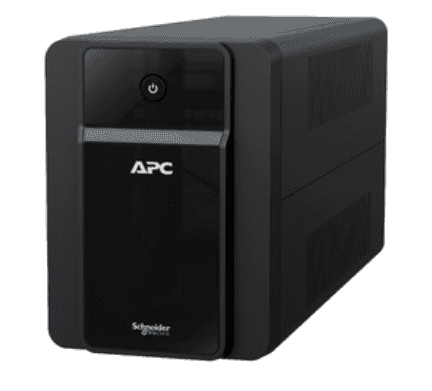
If you’ve bought an APC Line-R voltage stabilizer to protect your electronics, one question stops most Indian buyers in their tracks: where exactly does it go in the wiring chain? Should the stabilizer sit before the UPS, or after it? Should your TV plug into the stabilizer or the UPS? Getting the order wrong can mean nuisance beeping, faster battery drain, or a stabilizer that never actually does its job. This guide explains the correct wiring order for Indian homes and small offices — where mains voltage routinely swings from 160V in summer load-shedding hours to 260V+ at midnight.
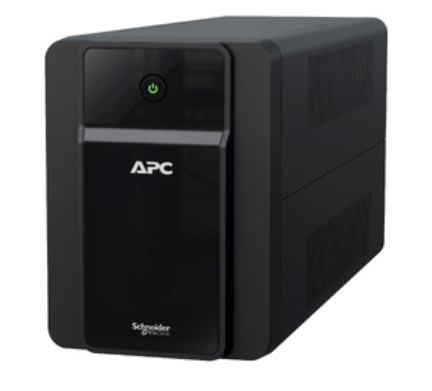
The short answer: stabilizer first, then UPS
For 90% of Indian home and office setups, the correct order is: Wall socket → APC Line-R stabilizer → UPS → your equipment. The stabilizer’s job is to correct the raw mains voltage before anything else sees it. The UPS then receives a clean, in-range voltage, which keeps it from switching to battery every time the mains dips or spikes. This is the arrangement APC’s Line-R stabilizer range is designed for.
Put the stabilizer after the UPS and you defeat the purpose: the UPS still sees dirty mains, still trips to battery on every swing, and drains its battery unnecessarily. During an actual power cut, the stabilizer would also be running off the battery, wasting runtime.
Why this order works in Indian conditions
Indian mains voltage is rarely stable. Depending on your area you may see:
- Low voltage (160–190V): common during peak evening load or in the last house on a long feeder line.
- High voltage (250–270V): common late at night when area demand drops.
- Rapid fluctuation: as loads switch on and off across the neighbourhood.
A line-interactive UPS like the APC Back-UPS BX/BR series has AVR (Automatic Voltage Regulation), but it only corrects a limited band. Once voltage moves outside that band, the UPS gives up and switches to battery. A dedicated stabilizer in front of it has a much wider correction window (roughly 140V–290V input for typical Line-R models), so the UPS almost never needs to fall back on its battery for voltage reasons alone. Your UPS battery then lasts longer because it isn’t cycled dozens of times a day.

When do you NOT need a stabilizer before the UPS?
Not every setup needs both devices. Consider skipping the stabilizer if:
- Your mains voltage stays within roughly 180V–260V — the UPS AVR handles this comfortably.
- You only run a PC, router or CCTV through the UPS, and the UPS rarely trips to battery on its own.
Add a stabilizer when:
- You have appliances that can’t run on a UPS — refrigerators, air conditioners, large TVs — and need direct voltage protection.
- Your UPS beeps and switches to battery constantly even when there’s no power cut (a sign of out-of-band voltage).
- You’re in an area with chronic under- or over-voltage.
The comparison at a glance
| Wiring order | What happens | Verdict |
|---|---|---|
| Mains → Stabilizer → UPS → Load | UPS gets clean voltage, rarely trips to battery, battery lasts longer | Correct for most homes/offices |
| Mains → UPS → Stabilizer → Load | UPS still sees dirty mains and trips often; stabilizer drains battery in a cut | Wrong — avoid |
| Stabilizer only (no UPS) | Voltage protection but no backup during cuts | OK for fridge/AC, not for PCs |
| UPS only (no stabilizer) | Backup + AVR, but limited voltage range | Fine if voltage is moderate |
Practical wiring tips for Indian setups
- Match capacities. The stabilizer must be rated higher than the UPS input load. A stabilizer that’s too small will trip or overheat.
- Separate the heavy appliances. Don’t run your AC or fridge through the same stabilizer feeding the UPS if it isn’t sized for the combined load. Give them their own stabilizer.
- Check the UPS input voltage window. If your line-interactive Back-UPS already handles your voltage range, an extra stabilizer may be redundant expense.
- Mind the earthing. Both devices rely on a proper earth. Poor earthing in Indian homes causes nuisance faults regardless of wiring order.
Frequently Asked Questions
Can I plug my UPS directly into the wall and skip the stabilizer?
Yes, if your mains voltage stays within the UPS’s AVR range (roughly 180–260V for most APC Back-UPS models). Only add a stabilizer if the UPS frequently switches to battery due to voltage swings, or if you also need to protect non-UPS appliances.
Will putting a stabilizer before the UPS void the warranty?
No. A correctly sized stabilizer feeding clean voltage to the UPS is a recommended practice and does not affect warranty. In fact it can reduce battery wear. Just avoid overloading either device.
My stabilizer clicks/relays every few seconds — is that normal?
Occasional clicking as it corrects voltage is normal. Constant rapid clicking suggests severe fluctuation at your supply, or that the stabilizer is undersized. Have your electrician check the incoming voltage and confirm the stabilizer’s rating suits your load.
Do I still need a stabilizer if I use an online (double-conversion) UPS?
Usually not for the equipment on the UPS. An online UPS from the APC online UPS range continuously regenerates the output waveform and voltage, so it inherently handles wide input swings. You’d only add a stabilizer for separate appliances not connected to that UPS.
Bottom line
For nearly every Indian home and small-office scenario, wire your APC Line-R stabilizer before the UPS: mains → stabilizer → UPS → equipment. This gives the UPS clean, in-range voltage, cuts down unnecessary battery cycling, and extends both battery and equipment life. If your voltage is already moderate and your UPS rarely trips on its own, you may not need the stabilizer at all — save the money. When you do need one, size it above your total connected load and browse the full APC Line-R voltage stabilizer collection to match the right model to your home or office.
Shop what this guide covers
- APC Back-UPS — for home & small officeLine-interactive UPS for desktops, Wi-Fi routers, CCTV and billing machines.
- APC Smart-UPS & online UPSDouble-conversion, pure sine-wave power for servers, racks and critical loads.
- APC Line-R voltage stabilizersProtection against the voltage swings that shorten equipment life.
What size UPS do I need? »Find the battery for my UPS »Ask us on WhatsApp
Related guides
- Does Your APC Line-R Stabilizer Need Earthing? Installation & Safety Checklist Before You Buy (India 2026)
- APC Line-R Stabilizer Specs Decoded: Which Features Actually Matter Before You Buy (India 2026)
- Sizing an APC Line-R Stabilizer for Refrigerators, ACs & Pumps: Why Starting Surge Matters More Than Running Watts (India 2026)
- Does an APC Line-R Stabilizer Protect You During a Power Cut? What It Can (and Can’t) Do in India (2026)
- Hardwired or Plug-In? APC Smart-UPS Input/Output Connections Explained Before You Buy (India 2026)
All UPS & power-backup guides · APC battery replacement chart · APC UPS dealer in your city