
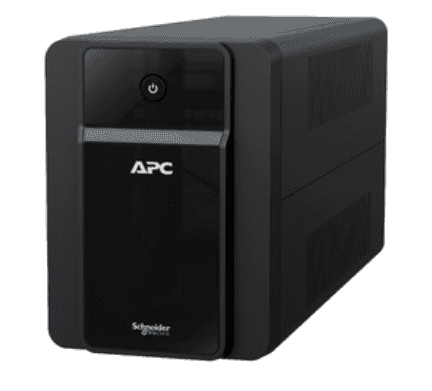
Walk into any electronics market in India and you’ll find no-name voltage stabilizers priced at half of what an APC Line-R costs. On paper they look the same — a box that promises to protect your TV, AC or refrigerator from voltage swings. But when mains voltage in your area regularly dips to 160V or spikes past 260V, the difference between a branded APC Line-R and a generic local unit becomes very real, very fast. Here’s what actually separates them, and how to decide which one your home or office needs.
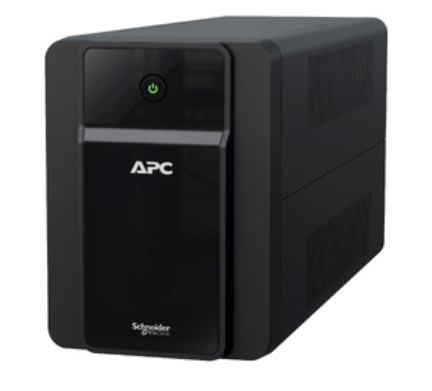
What a Voltage Stabilizer Is Actually Supposed to Do
A stabilizer doesn’t store energy. It sits between your mains supply and your appliance, constantly measuring incoming voltage and correcting it — boosting it up when it’s too low, trimming it down when it’s too high — so your appliance always sees a safe, narrow voltage band, usually close to 220-230V. This is different from a UPS, which provides battery backup during a complete power cut. If you haven’t settled that basic question yet, it’s worth reading through a stabilizer-vs-UPS comparison before choosing hardware.
Where Cheap Local Stabilizers Fall Short
Most generic stabilizers sold in local markets use relay-based or basic transformer-tap correction with a narrow input voltage window — often just 170V-260V. Outside that band, they either cut off completely or pass through unsafe voltage. APC’s Line-R series (600VA, 1200VA and 1500VA models) is built with a wider AVR (Automatic Voltage Regulation) correction range, faster response time to sudden sags and surges, and proper overload/short-circuit protection built into the same unit.
- Correction range: APC Line-R typically handles a wider input band before cutting power, which matters in areas with severe voltage sag during summer AC-load hours.
- Response speed: Faster correction means less flicker and stress on compressor-based appliances like ACs and refrigerators.
- Build & components: Branded units use better-rated transformers and relays rated for continuous duty, not just intermittent household use.
- Warranty & support: APC stabilizers come with documented, serviceable warranty support; most local brands offer little beyond a shop-level guarantee.
- Consistency across units: Two APC Line-R units of the same model behave identically; quality control on unbranded stabilizers varies batch to batch.
APC Line-R vs Generic Stabilizer — Side by Side
| Feature | APC Line-R | Typical Local Stabilizer |
|---|---|---|
| Input voltage window | Wider, tolerates deeper sags/surges | Narrower, cuts off sooner |
| Correction speed | Fast, minimal flicker | Slower, visible flicker on correction |
| Overload/short-circuit protection | Built-in, rated | Sometimes absent or minimal |
| Warranty | Documented brand warranty | Limited, shop-dependent |
| Price | Higher upfront | Lower upfront |
When a Local Stabilizer Might Actually Be Fine
Not every load justifies the premium. For a single low-cost appliance in an area with genuinely mild voltage fluctuation — say a basic ceiling fan or a low-end television that already has a wide-tolerance internal power supply — a generic stabilizer may work adequately for a while. The risk shows up with:
- Compressor-based appliances (AC, refrigerator, washing machine) that draw high inrush current and are sensitive to voltage instability.
- Expensive electronics — LED/LCD TVs, home theatre systems, desktop PCs — where a single bad surge can mean a costly repair.
- Areas with agricultural or industrial load nearby, where voltage sag during peak hours is severe and frequent.
In all three cases, the cost of one repair or one burnt appliance usually exceeds the price difference between a local unit and an APC Line-R.

Sizing: Don’t Just Match the Stabilizer to the Appliance’s Running Watts
A common mistake is buying a stabilizer rated exactly to an appliance’s running wattage. Compressor loads (AC, fridge) draw a heavy starting surge — often 2-3x running watts for a second or two. Undersized stabilizers trip or fail under this surge repeatedly, shortening their life. As a rule of thumb, size the stabilizer at least 20-25% above the appliance’s rated running load, and check the manufacturer’s recommended VA/kVA rating for your specific AC tonnage or refrigerator capacity. You can browse the full range of APC voltage stabilizers to compare VA ratings and find the right match for your appliance before buying.
Stabilizer vs UPS — Don’t Confuse the Two Jobs
A stabilizer will not keep your equipment running during a total power cut — it has no battery. If your area has both voltage instability and frequent outages, you likely need both: a stabilizer for heavy appliances like AC and refrigerator, and a UPS from APC’s line-interactive range for computers, routers and other electronics that need actual backup time, not just corrected voltage.
FAQ
Can I use one APC Line-R for multiple appliances?
Only if the combined load stays within the stabilizer’s rated capacity, and ideally you avoid mixing a heavy compressor appliance with sensitive electronics on the same unit — a surge on one can affect correction quality for the other. Dedicated stabilizers per major appliance are safer.
Does a stabilizer protect against lightning surges?
Most stabilizers, including Line-R, include basic surge suppression, but a severe lightning-induced surge can still bypass protection. Pair it with a dedicated surge protector or ensure proper earthing for full protection.
My AC already has a stabilizer built in — do I still need an external one?
Built-in protection in most ACs is minimal and meant for mild fluctuation, not sustained deep voltage sags common in Indian summers. An external stabilizer sized for your AC’s tonnage is still recommended in high-fluctuation areas.
Is it worth upgrading from a local stabilizer to APC Line-R if my current one still works?
If your current stabilizer has already tripped repeatedly, delayed correction visibly (lights flickering), or is out of any warranty, replacing it before it fails during peak summer load is a sound decision — the cost of a damaged AC compressor far exceeds the stabilizer’s price.
Shop what this guide covers
- APC Back-UPS — for home & small officeLine-interactive UPS for desktops, Wi-Fi routers, CCTV and billing machines.
- APC Line-R voltage stabilizersProtection against the voltage swings that shorten equipment life.
What size UPS do I need? »Find the battery for my UPS »Ask us on WhatsApp
Related guides
- APC Line-R vs Servo Stabilizer: Which Voltage Stabilizer Should You Buy in India? (2026 Guide)
- APC Line-R Stabilizer Form Factors: Wall-Mount, Tabletop or Rack-Mount — Which Should You Buy? (India 2026)
- Sizing an APC Line-R Stabilizer for Refrigerators, ACs & Pumps: Why Starting Surge Matters More Than Running Watts (India 2026)
- Does Your APC Line-R Stabilizer Need Earthing? Installation & Safety Checklist Before You Buy (India 2026)
- Does an APC Line-R Stabilizer Protect You During a Power Cut? What It Can (and Can’t) Do in India (2026)
All UPS & power-backup guides · APC battery replacement chart · APC UPS dealer in your city