
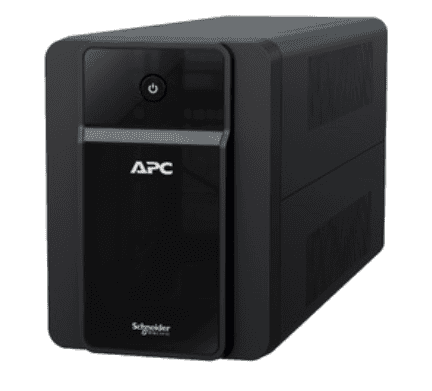
Almost every Indian buyer researching power protection runs into the same confusion: do I need a voltage stabilizer, a UPS, or both? The two devices look similar, sit near the same wall socket, and both get credited with “saving” appliances — but they solve completely different problems. Buy the wrong one and you either waste money or leave your equipment exposed. This guide breaks down exactly when an APC Line-R stabilizer is enough, when you need a UPS instead, and how to pick the right model for your situation.
The Core Difference: Correction vs Backup
A voltage stabilizer, like the APC Line-R series, constantly monitors incoming mains voltage and corrects it before it reaches your appliance. If your area’s supply swings between 160V and 280V (common in many Indian towns, especially during summer when ACs and motors load the grid), the Line-R brings that voltage back to a safe ~220-230V band. What it does not do is store any energy — the moment the power actually cuts off, everything downstream of a stabilizer switches off instantly, same as if it were connected directly to the wall.
A UPS, on the other hand, has a battery inside. It also corrects voltage to some extent (through AVR — Automatic Voltage Regulation) but its main job is to keep devices running for several minutes during a complete blackout by switching to battery power.
When a Stabilizer Alone Is Enough
Appliances that don’t need to survive a power cut — they just need protection from voltage swings while the power is on — are good stabilizer-only candidates:
- Refrigerators and deep freezers
- Split and window ACs
- Washing machines and water pumps
- Microwave ovens and kitchen appliances
- Older CRT/LED TVs without surge-sensitive boards
None of these need to keep running when the grid goes down. What they do need is protection from the brownouts and voltage spikes that burn out compressors and motor windings over time. For these, a correctly sized APC Line-R voltage stabilizer is the right and more affordable choice compared to a UPS of equivalent capacity.
When You Actually Need a UPS
If a device losing power even for a few seconds causes real damage or disruption, you need a UPS, not just a stabilizer:
- Desktop PCs and workstations (unsaved work, corrupted files, hardware stress from abrupt shutdown)
- Wi-Fi routers, modems and CCTV/NVR systems (you lose connectivity and recording exactly when you need it most)
- Billing systems, POS terminals and small servers
- Medical or lab equipment that must stay on
For these, look at the APC Back-UPS range or, for business-critical gear, a true online UPS from the APC online UPS category. A stabilizer gives these devices zero help the moment mains power fails.
Do You Ever Need Both?
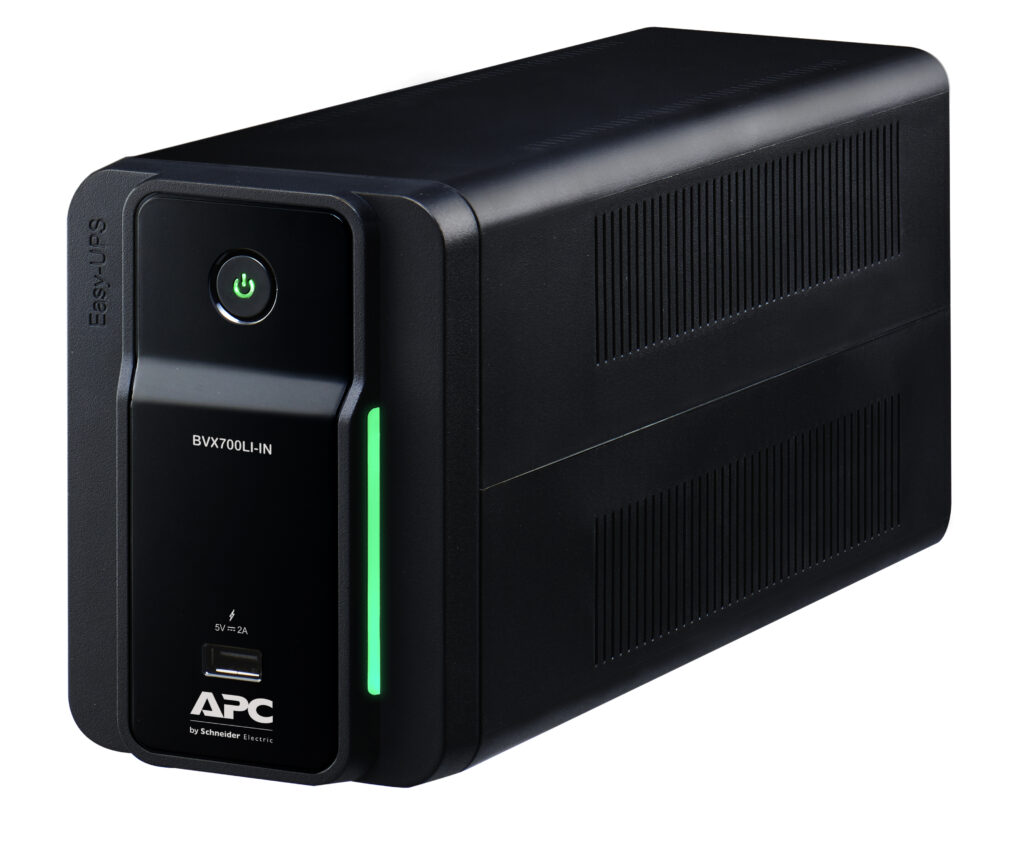
Yes — and this is the most common setup in homes with genuinely unstable supply. Many Indian UPS models, including APC’s Back-UPS range, already include basic AVR, but AVR inside a UPS is designed to protect the UPS and connected electronics within a modest voltage window (often around 160V-280V) and corrects in wider steps than a dedicated stabilizer. If your area sees voltage drop below 140V or spike past 290V regularly — common in rural and semi-urban feeders — a separate Line-R stabilizer ahead of your heavier appliances (AC, fridge, pump) plus a UPS for your PC/router setup is the more reliable combination than relying on AVR alone.
Comparison at a Glance
| Feature | APC Line-R Stabilizer | APC UPS (Back-UPS/Online) |
|---|---|---|
| Corrects voltage fluctuation | Yes, continuously | Yes, within a set range (AVR) |
| Runs device during blackout | No | Yes, for several minutes |
| Best for | Fridges, ACs, pumps, motors | PCs, routers, CCTV, servers |
| Typical cost vs capacity | Lower per watt | Higher per VA |
| Battery maintenance needed | No | Yes (periodic RBC replacement) |
Picking the Right APC Line-R Model
Once you’ve confirmed a stabilizer is the right call, sizing it correctly matters more than the brand name on the box. The APC Line-R range spans smaller 600VA units suitable for a single TV or router, mid-size 1200VA-1500VA models for a refrigerator or one AC, and higher-capacity units for multiple heavy appliances or a small retail outlet. The key sizing rule: always size against the appliance’s starting surge (compressors and motors draw 3-5x their running wattage for a second or two at startup), not just its running wattage on the nameplate. Undersizing is the single most common mistake buyers make, and it leads to the stabilizer tripping or shutting down exactly when you need it.
Buying Checklist Before You Decide
- List every appliance you want protected and separate them into “needs to survive a blackout” vs “just needs stable voltage”
- Check your area’s actual voltage swing with a simple multimeter reading at different times of day
- For stabilizer-only appliances, size the Line-R against starting surge, not running watts
- For UPS-needed devices, check VA rating against your calculated load with headroom
- If outfitting an entire home or office, compare bulk pricing rather than buying piecemeal
For offices or facility managers protecting multiple appliances and workstations across a building, it’s worth generating a formal, GST-inclusive quotation rather than pricing items one by one — our instant quotation builder lets you select stabilizers and UPS units together and get a numbered PDF with freight included in about a minute, with no salesperson needed.
Frequently Asked Questions
Can I just use a bigger UPS instead of a stabilizer?
Technically a UPS with strong AVR can correct moderate voltage swings, but it’s not designed to continuously handle heavy motor loads like ACs or pumps, and its battery wears out faster under constant voltage correction duty. A dedicated stabilizer is built for that job.
Does a stabilizer protect against lightning surges?
A basic stabilizer corrects sustained over/under voltage but isn’t a substitute for surge protection. Many APC Line-R models include surge suppression circuitry, but for lightning-prone areas, pair it with proper earthing.
Will a stabilizer increase my electricity bill?
The correction process consumes a small amount of power, but it’s negligible compared to the appliance it’s protecting — far less than the cost of repairing a burnt compressor or motor.
Can one stabilizer protect my whole house?
A single higher-capacity Line-R unit can protect multiple appliances if sized for their combined starting surge, but many homes prefer separate smaller units per major appliance for easier troubleshooting and lower upfront cost.
Shop what this guide covers
- Which APC UPS for Desktop PCs?Load table, VA sizing and the genuine APC units we stock for it.
- APC Back-UPS — for home & small officeLine-interactive UPS for desktops, Wi-Fi routers, CCTV and billing machines.
- APC Smart-UPS & online UPSDouble-conversion, pure sine-wave power for servers, racks and critical loads.
- APC Line-R voltage stabilizersProtection against the voltage swings that shorten equipment life.
What size UPS do I need? »Find the battery for my UPS »Ask us on WhatsApp
Related guides
- Voltage Stabilizer or UPS for Your Gaming PC? Which Should You Buy in India? (2026 Guide)
- Voltage Stabilizer for Water Purifiers, Microwaves & Kitchen Appliances: Do You Need an APC Line-R in India? (2026 Buying Guide)
- APC Back-UPS 600VA vs 850VA vs 1100VA: Which Should You Buy for Home or Small Office in India? (2026)
- Do You Need an APC Line-R Stabilizer for Your TV & Home Theatre? (India 2026 Buying Guide)
- APC Extended Warranty Pack Coverage Tiers Explained: Which Level Does Your UPS Actually Need? (India 2026 Buying Guide)
All UPS & power-backup guides · APC battery replacement chart · APC UPS dealer in your city