
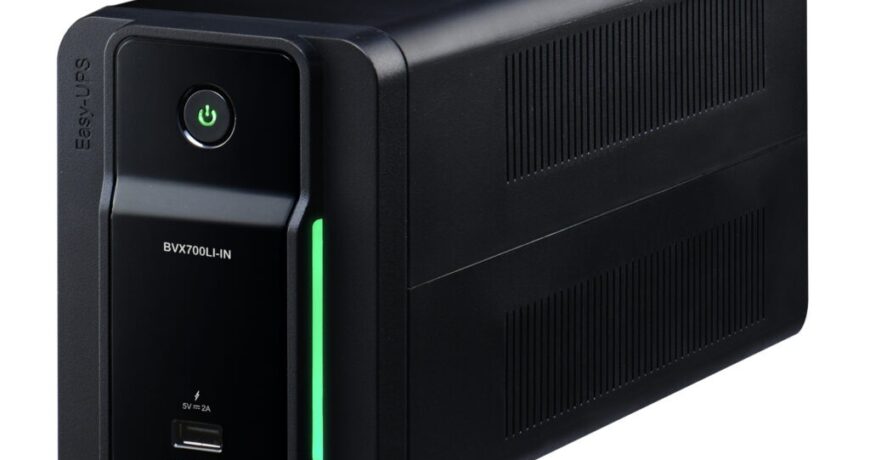
Most APC Back-UPS buyers in India are choosing between sealed lead-acid models (the BX and BR series) without realising there’s now a lithium-ion option — the APC Easy-UPS BVX. If you’re comparing specs and wondering whether the extra cost of a lithium-ion UPS is worth it for your home or small office, here’s what actually matters: battery life, weight, heat tolerance, and total cost of ownership over 5-7 years, not just the sticker price on day one.
Lead-Acid vs Lithium-Ion: The Core Difference
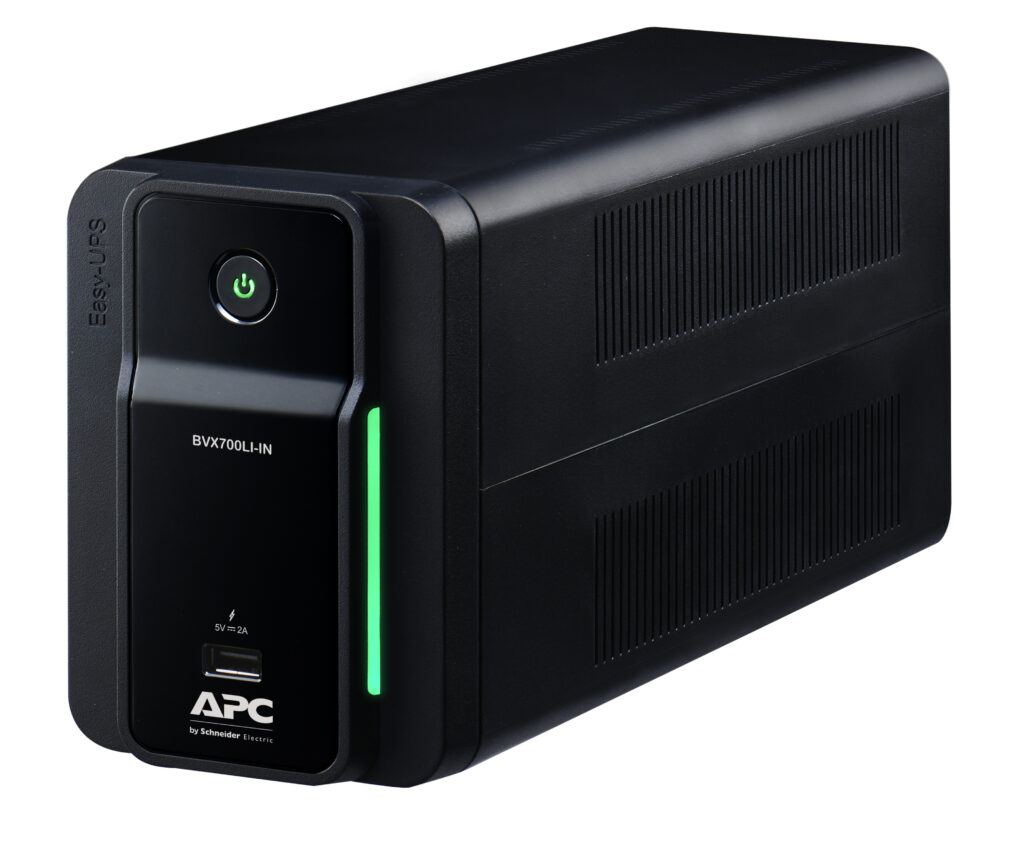
Every classic APC Back-UPS — the BX600, BX1100, BR1000G and similar models — uses a Valve Regulated Lead-Acid (VRLA) battery. It’s a proven, affordable chemistry that has powered Indian homes and offices for two decades. The APC Easy-UPS BVX instead uses a lithium-ion (LiFePO4-type) battery pack, which is lighter, charges faster, and typically lasts 2-3 times longer before it needs replacement.
Upfront Cost vs Total Cost of Ownership
Lithium-ion UPS units cost more upfront than an equivalent VA lead-acid model. But lead-acid batteries in Indian conditions usually need replacement every 2-3 years (sooner if you face daily long outages or high ambient heat), while lithium-ion packs are rated for significantly longer service life with far fewer charge-cycle losses. Over a 6-year ownership period, a lithium-ion UPS can work out cheaper once you factor in avoided RBC battery replacements and the labour of swapping them.
Backup Time & Runtime Behaviour
For similar VA ratings, backup time between the two is broadly comparable when the battery is new — but lead-acid runtime degrades noticeably faster as the battery ages, especially past year two. A lithium-ion UPS holds its rated runtime more consistently over its life, which matters if you rely on backup for a Wi-Fi router, CCTV DVR, or desktop during long evening power cuts.
Size, Weight & Placement
This is where lithium-ion clearly wins for tight spaces. A lithium-ion pack of equivalent capacity weighs roughly 40-50% less than a lead-acid one, making the BVX easier to wall-mount or tuck into a shelf near your router or workstation — useful in small offices or apartments where floor space near the desk is limited.
Indian Heat & Battery Longevity
Lead-acid batteries are sensitive to heat; every 10°C above 25°C roughly halves their expected life, which is a real issue in un-airconditioned rooms during Indian summers. Lithium-ion chemistry tolerates higher ambient temperatures with less life-shortening effect, making it a better fit if your UPS sits in a warm utility room, store, or unshaded office corner without AC.
Which One Should You Actually Buy?
- Choose a lead-acid APC Back-UPS (BX/BR) if your budget is tight, you have a cool, ventilated spot for the UPS, and you don’t mind replacing the battery every 2-3 years.
- Choose the lithium-ion APC Easy-UPS BVX if you want fewer battery replacements, need a lighter/wall-mountable unit, run the UPS in a warm room, or you’re setting up a small office where uptime reliability matters more than upfront savings.
- Either way, size correctly first — chemistry doesn’t fix an undersized UPS. Match VA rating to your actual connected load before comparing battery type.
Comparison at a Glance
| Feature | Lead-Acid Back-UPS (BX/BR) | Lithium-Ion Easy-UPS (BVX) |
|---|---|---|
| Typical battery life | 2-3 years | 6-8+ years |
| Upfront price | Lower | Higher |
| Weight (similar VA) | Heavier | 40-50% lighter |
| Heat tolerance | Sensitive to high ambient temps | More tolerant |
| Wall-mount friendly | Rarely | Yes, in most models |
| Best for | Budget-first home use | Warm rooms, small offices, low-maintenance needs |
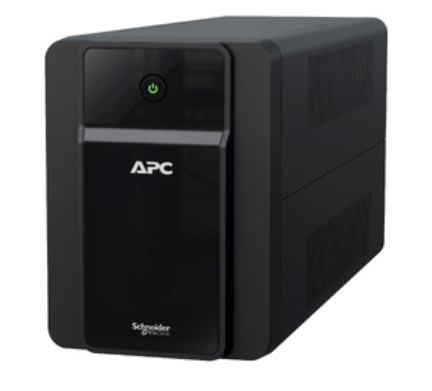
Both families fall under APC’s line-interactive UPS range, so you’re not sacrificing voltage regulation or surge protection either way — the decision really comes down to battery chemistry and where the unit will physically sit. If you’re outfitting a small office with multiple desks, routers, and a CCTV DVR, it’s worth generating a formal quotation for both configurations before deciding — our instant quote builder lets you compare a lead-acid and lithium-ion setup side by side with GST and freight included in about a minute.
Frequently Asked Questions
Is a lithium-ion UPS overkill for a single Wi-Fi router at home?
For one low-power device, a small lead-acid Back-UPS is usually the more economical choice — the lithium-ion advantage matters more when you have multiple devices, a warm installation spot, or want to minimise battery replacement hassle over the years.
Can I replace a lead-acid Back-UPS battery with a lithium-ion one myself?
No — the BX/BR and BVX series use different battery management circuitry designed for their specific chemistry. You cannot swap a lead-acid RBC cartridge into a lithium-ion unit or vice versa; the UPS model itself determines which battery type it uses.
Does the lithium-ion BVX need a different charging routine before first use?
Like any new UPS, give it a full initial charge (typically 8-16 hours) before relying on it during a power cut, but lithium-ion packs generally charge faster than lead-acid once in regular use.
Will a lithium-ion UPS work fine in a non-AC server or store room in India?
Yes, that’s one of its practical advantages — lithium-ion tolerates warmer ambient conditions better than VRLA lead-acid, making it a sensible pick for utility rooms, small stores, or offices without dedicated AC for the UPS.
Shop what this guide covers
- Genuine APC RBC replacement batteriesFactory-sealed APC Replacement Battery Cartridges with full manufacturer warranty.
- APC Back-UPS — for home & small officeLine-interactive UPS for desktops, Wi-Fi routers, CCTV and billing machines.
- APC UPS battery replacement guideModel-by-model chart of which APC RBC cartridge your UPS takes.
- Build an instant APC UPS quotationGST worked out, freight to your pincode, numbered PDF emailed in about a minute.
What size UPS do I need? »Find the battery for my UPS »Ask us on WhatsApp
Related guides
- APC Back-UPS Model Numbers Decoded: What BX, BV, BR & BVX Codes Mean Before You Buy (India 2026)
- How Long Can an APC Back-UPS Power Your Wi-Fi Router & CCTV During a Long Power Cut? (India 2026 Sizing Guide)
- Ideal Load Percentage for Your APC Back-UPS: How Much Headroom Should You Buy in 2026? (India Guide)
- APC Back-UPS Features Decoded: LCD, AVR & USB Monitoring — What Actually Matters Before You Buy (India 2026)
- Cold-Start Feature in APC Back-UPS: Why It Matters for Wi-Fi Routers & CCTV During Long Power Cuts (India 2026)
All UPS & power-backup guides · APC battery replacement chart · APC UPS dealer in your city