
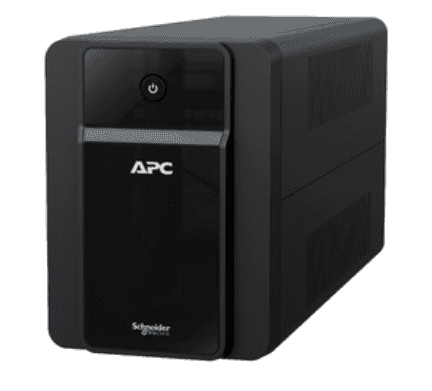
If this is the first time you’re buying a UPS, the sheer number of VA ratings, series names (BX, BR, BVX) and technical terms can be confusing. Most first-time buyers either overspend on a unit far bigger than they need, or underspend and end up with a UPS that trips the moment the monitor and printer are both running. This checklist walks you through everything to check before you buy an APC Back-UPS for your home or small office, so you get the right size, the right features, and no surprises after the power cut hits.
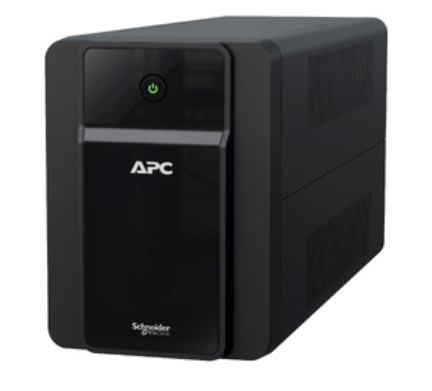
Step 1: List Every Device You Want to Back Up
Before you look at a single model number, write down what actually needs power during an outage. A typical work-from-home setup includes a desktop or laptop charger, a monitor, a Wi-Fi router, and maybe a desk lamp or CCTV DVR. Add up the wattage printed on each device (or its power adapter) — this is your real load, not a guess.
- Desktop PC + monitor: roughly 150-250W
- Wi-Fi router + modem: 10-20W combined
- CCTV DVR + 4 cameras: 40-60W
- LED bulb/fan: 15-75W each
Step 2: Understand VA vs Watts (Don’t Get Fooled by the Sticker Number)
Every APC Back-UPS is rated in VA (Volt-Amps), but your appliances are rated in watts. Because of power factor, the usable wattage of a UPS is roughly 60% of its VA rating for Back-UPS models. So a 600VA unit gives you about 360W of usable output — enough for a router and a couple of CCTV cameras, but not a full desktop setup. Always size for your total watts, then work backwards to the VA rating, with some headroom (20-30%) for safety and battery health.
Step 3: Match the Model to Your Use Case
| Use Case | Recommended VA | Typical Backup Time |
|---|---|---|
| Wi-Fi router + modem + 1-2 CCTV cameras | 600VA | 2-4 hours |
| Single desktop PC + monitor | 1000VA | 25-40 minutes at full load |
| Desktop + monitor + router + lights | 1100-1500VA | 30-60 minutes |
| Gaming PC / high-performance workstation | 1500VA (BR series, pure sine wave) | 20-35 minutes |
Step 4: Decide Between BX and BR Series
APC’s BX series (standard Back-UPS) uses a stepped/simulated sine wave output, which works fine for PCs, routers and LED lights. If you’re running sensitive electronics — an audio system, a laser printer, or a gaming rig with a high-end SMPS — the BR series (Back-UPS Pro) delivers pure sine wave output, closer to actual grid power, which reduces the risk of humming, overheating or premature hardware wear.

Step 5: Check Outlets, Battery Type and Warranty
- Number of outlets: Count how many devices you’ll plug in directly — most 600-1100VA models have 3-4 outlets, but only some are battery-backed.
- Battery type: Standard sealed lead-acid batteries are budget-friendly and easy to replace later; lithium-based models like the APC Easy-UPS BVX last longer and handle Indian heat better, at a higher upfront cost.
- Warranty: Most APC Back-UPS units come with a standard warranty, and you can extend cover later — worth knowing before you decide whether to add a warranty pack at checkout.
- Buy from a genuine source: Always purchase from an authorised APC dealer to ensure you get genuine batteries and valid warranty registration. Browse the full range of APC line-interactive UPS models to compare specifications side by side before deciding.
Step 6: Plan for Battery Replacement in Advance
Every UPS battery has a finite life — typically 3-5 years depending on usage and heat. When the time comes, you’ll want a matching APC RBC replacement battery rather than a generic one, since APC’s Back-UPS units are calibrated for specific battery specifications. Keeping this in mind at purchase time also helps you budget for the total cost of ownership, not just the sticker price of the UPS.
Do I need a UPS if I already have an inverter at home?
A home inverter is designed for whole-house backup (fans, lights, TV) over longer durations, while a UPS gives instant, near-zero switchover time specifically for sensitive electronics like PCs and routers. Many Indian homes use both — an inverter for general backup and a small APC Back-UPS dedicated to the computer and networking gear.
Can one APC Back-UPS power my PC, router and CCTV together?
Yes, if you size it correctly. Add up the combined wattage of all three and choose a model with at least 20-30% headroom above that total — typically a 1100VA or 1500VA unit rather than a 600VA one meant for light loads alone.
How long will a new APC Back-UPS actually run my desktop?
For a typical desktop and monitor drawing 150-200W, a 1000-1100VA Back-UPS will usually give 25-45 minutes of runtime, which is enough to save your work and shut down safely during most urban power cuts.
Is it worth paying extra for a BR-series (pure sine wave) model?
If you’re running only basic office equipment, the standard BX series is sufficient. If your setup includes gaming PCs, audio equipment, or other electronics sensitive to power quality, the BR series is a worthwhile upgrade.
Shop what this guide covers
- Genuine APC RBC replacement batteriesFactory-sealed APC Replacement Battery Cartridges with full manufacturer warranty.
- APC Back-UPS — for home & small officeLine-interactive UPS for desktops, Wi-Fi routers, CCTV and billing machines.
- APC UPS battery replacement guideModel-by-model chart of which APC RBC cartridge your UPS takes.
- APC UPS dealer in your cityDelivery times, coverage and contact for 40 cities across India.
What size UPS do I need? »Find the battery for my UPS »Ask us on WhatsApp
Related guides
- APC Back-UPS Features Decoded: LCD, AVR & USB Monitoring — What Actually Matters Before You Buy (India 2026)
- APC Extended Warranty Pack: What’s NOT Covered? A Pre-Purchase Exclusions Checklist (India 2026)
- How to Measure Your Actual Load Before Buying an APC Back-UPS: A Watt-Meter Sizing Method (India 2026)
- How to Check Your APC UPS Warranty Status & Renew Before It Expires (India 2026 Guide)
- Hardwired or Plug-In? APC Smart-UPS Input/Output Connections Explained Before You Buy (India 2026)
All UPS & power-backup guides · APC battery replacement chart · APC UPS dealer in your city