
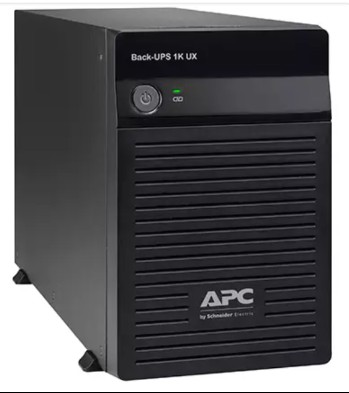
If you’ve noticed your APC UPS holding the load for 20 minutes in winter but barely 8–10 minutes by May, you’re not imagining things. Battery performance is deeply tied to temperature, and Indian summers — where indoor cabinets and rooms regularly cross 35–40°C — are brutal on the lead-acid batteries inside most home and small-office UPS units. This guide explains exactly why heat steals your runtime, how much capacity you actually lose, and the practical steps you can take to protect your backup before the next power cut.

How Heat Actually Reduces Battery Capacity
The sealed lead-acid (VRLA) batteries inside APC Back-UPS units are rated to perform best at around 25°C. Two things happen as temperature rises:
- Faster self-discharge and chemical activity: Higher heat accelerates the internal reactions, which temporarily increases capacity slightly but dramatically shortens lifespan.
- Accelerated ageing: A widely accepted rule of thumb is that battery life roughly halves for every 8–10°C rise above 25°C. A battery rated for 3–5 years at 25°C may last only 1.5–2 years if it constantly sits at 35–40°C.
So in summer you get a double hit: an ageing battery (worn down by previous hot seasons) combined with the load demanding the same power. The result is the steep runtime drop you see on the display or hear in shorter beeps before shutdown.
How Much Runtime Do You Really Lose?
While exact numbers vary by model and battery age, the general relationship between ambient temperature and usable life looks like this:
| Ambient Temperature | Effect on Capacity (short-term) | Effect on Battery Lifespan |
|---|---|---|
| 25°C (ideal) | 100% rated | Full rated life (e.g. 3–5 yrs) |
| 30°C | ~Slightly higher, but ageing begins | Reduced noticeably |
| 35°C | Marginally higher output | Roughly halved |
| 40°C+ | Unstable, swelling risk | Drastically shortened |
Note that at higher temperatures the available capacity may even read normal for a while — but the battery is degrading fast in the background. That’s why many users get caught off guard: the UPS works fine in April, then suddenly fails to hold the load by June.
Warning Signs Your Battery Is Heat-Stressed
- Backup time during a power cut is noticeably shorter than a few months ago.
- The UPS gives a low-battery warning much sooner than expected.
- The battery casing feels hot to the touch or looks slightly swollen (this is serious — stop using it).
- The UPS performs a self-test poorly or fails to switch over cleanly.
- Frequent clicking or relay switching even on stable mains.
A swollen or visibly bulging battery should be replaced immediately with a genuine APC RBC (Replacement Battery Cartridge) — never continue running it.
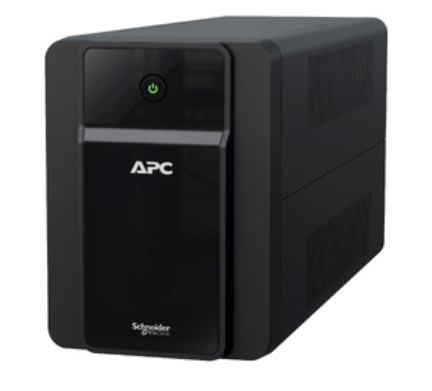
7 Practical Ways to Protect UPS Runtime in Summer
- Improve placement: Keep the UPS off the floor in a ventilated, shaded area. Avoid enclosed cabinets, sunlit window ledges, or spaces near inverters and other heat sources.
- Leave breathing room: Maintain at least 10–15 cm of clearance around the vents so heat can dissipate.
- Don’t stack things on top: Routers, set-top boxes, and books trap heat against the casing.
- Reduce the load: A lightly loaded UPS runs cooler and lasts longer. Move non-essential devices off the battery-backed sockets.
- Use a fan or AC space: If your home office is air-conditioned for part of the day, placing the UPS in that room makes a real difference.
- Run periodic self-tests: This confirms whether the battery still holds charge before you genuinely need it.
- Replace ageing batteries proactively: If your battery is 2+ years old and has survived multiple summers, plan a replacement before the hot season rather than after a failure.
Should You Consider a Lithium UPS?
Lithium-based UPS units, such as the APC Easy-UPS BVX lithium range, tolerate higher temperatures far better than traditional VRLA batteries and last significantly longer. For areas with poor cooling, frequent outages, and high ambient heat — common across much of India — the higher upfront cost can pay off through fewer replacements and more reliable summer performance. For most homes and small offices, though, a well-placed line-interactive Back-UPS with proper care remains the practical, affordable choice.
Choosing the Right Replacement or Upgrade
If your current UPS keeps failing in summer, you have two sensible paths:
- Replace the battery (RBC): If the UPS itself is healthy and only 3–4 years old, a genuine RBC restores full runtime at a fraction of a new unit’s cost.
- Upgrade the unit: If your UPS is undersized for today’s load or very old, move to a higher-rated model. For sensitive equipment and PCs, a pure sine wave unit like the APC Back-UPS Pro 1000VA (BR1000G-IN) is a strong choice, while a Back-UPS 1100VA (BX1100C-IN) suits general home and office loads.
You can browse the full range of options on our UPS collection page to match the right capacity to your load.
The Bottom Line
Summer runtime loss isn’t a defect — it’s physics. Heat both reduces the effective performance and silently shortens the life of your UPS battery. The good news is that smart placement, ventilation, load management, and timely battery replacement can keep your backup dependable even through the hottest months. Don’t wait for a mid-outage shutdown to discover your battery has quietly given up. A quick self-test today could save you a frustrating evening in the dark tomorrow.
Shop what this guide covers
- APC BX1100C-IN battery replacementThe correct RBC2 cartridge for the BX1100C-IN (1100VA).
- APC BR1000G-IN battery replacementThe correct RBC144 cartridge for the BR1000G-IN (1000VA).
- Genuine APC RBC replacement batteriesFactory-sealed APC Replacement Battery Cartridges with full manufacturer warranty.
- APC Back-UPS — for home & small officeLine-interactive UPS for desktops, Wi-Fi routers, CCTV and billing machines.
What size UPS do I need? »Find the battery for my UPS »Ask us on WhatsApp
Related guides
- First-Time UPS Buyer? A Complete Checklist Before You Purchase an APC Back-UPS in India (2026)
- Does APC Extended Warranty Cover Lightning & Voltage Surge Damage in India? (2026 Buyer’s Guide)
- Does Your APC Line-R Stabilizer Need Earthing? Installation & Safety Checklist Before You Buy (India 2026)
- APC Smart-UPS Online Running Costs in India: Double-Conversion Efficiency, ECO Mode & Electricity Bills Explained (2026)
- Ideal Load Percentage for Your APC Back-UPS: How Much Headroom Should You Buy in 2026? (India Guide)
All UPS & power-backup guides · APC battery replacement chart · APC UPS dealer in your city