
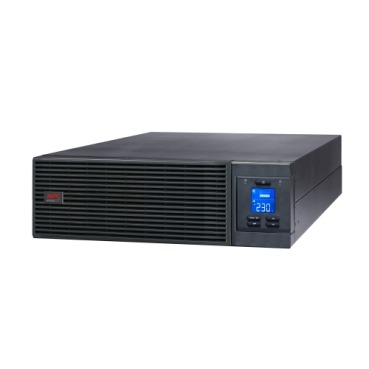
If you’ve compared UPS specification sheets, you’ve probably noticed a number called “transfer time” — usually 2-10 milliseconds for line-interactive models, and 0 milliseconds (zero) for online, double-conversion UPS systems. For a desktop or a router, that gap barely matters. For a server, NAS, EPABX, POS terminal, or industrial controller, it can be the difference between silent, uninterrupted operation and a reboot, a corrupted database, or a dropped transaction every time mains power blinks. This guide explains what transfer time actually is, why it exists, and why it should weigh heavily on your decision before you buy an APC online UPS for critical equipment in India.

What Is Transfer Time, Exactly?
Every line-interactive UPS (like the APC Back-UPS or Back-UPS Pro range) normally lets mains power pass through to your equipment, with the battery and inverter sitting in standby. The moment it detects a voltage sag, surge, or outage, it has to physically switch — via a relay — from mains to battery/inverter power. That switch takes a few milliseconds. It’s fast enough that lights don’t flicker and most electronics don’t notice. But a server’s power supply, a VOIP gateway, or a PLC in a factory line can interpret that tiny gap as a power loss and reset, especially during the frequent, short voltage fluctuations common on Indian LT/HT feeders.
An online (double-conversion) UPS — such as the APC Smart-UPS or Easy-UPS SRV/SRT series — works differently. It continuously converts incoming AC to DC and back to AC, so your equipment is always running off the UPS’s own clean, regulated inverter output, never directly off raw mains. There’s no relay to switch and no gap to bridge. That’s what “zero transfer time” means, and it’s the core reason businesses choose online UPS systems for servers rather than line-interactive units.
Why a Few Milliseconds Actually Matters
- Servers and NAS boxes: Even a brief power interruption can trigger an ungraceful shutdown, risking file-system corruption, RAID rebuilds, or database inconsistency.
- VOIP/EPABX systems: A momentary drop can disconnect active calls or reset the gateway mid-transaction.
- POS and billing terminals: A reset during a transaction can cause duplicate billing or lost sales records.
- Industrial controllers (PLCs, CNC, lab instruments): Micro-interruptions can halt a production cycle or invalidate a test run.
- Indian grid reality: Frequent short sags, especially during monsoon storms or heavy motor-load switching nearby, mean these transfers happen far more often here than in stable grids abroad.
Line-Interactive vs Online: A Side-by-Side Look
| Feature | Line-Interactive (e.g. APC Back-UPS / BR) | Online Double-Conversion (e.g. APC Smart-UPS / Easy-UPS SRV) |
|---|---|---|
| Transfer time | 2-10 ms (relay switch) | 0 ms (continuous inverter power) |
| Output waveform on battery | Pure sine on BR models, stepped on basic BX | Always pure sine, mains or battery |
| Voltage regulation | AVR corrects sags/surges in steps | Continuous double-conversion regulation |
| Best suited for | PCs, routers, TVs, small appliances | Servers, racks, EPABX, POS, industrial loads |
| Typical capacity range | 600VA-1500VA | 1kVA-20kVA and above, including 3-phase |
Does Every Server Need an Online UPS?
Not strictly — a single small home-lab server might run fine on a good line-interactive unit with pure sine output. But once equipment is revenue-critical (a billing server, an active-call EPABX, a networked storage array backing up live data), the cost of even one corrupted transaction usually dwarfs the price difference between a line-interactive and an online UPS. For office or data-closet racks, it’s also worth browsing line-interactive UPS options alongside online models to see where the line genuinely needs to be drawn for your specific load.

Other Things to Check Besides Transfer Time
- Input voltage window: Online UPS units typically accept a wider input range before switching to battery, meaning fewer battery cycles and longer battery life on unstable Indian supply.
- Battery runtime needed: Zero transfer time protects against micro-interruptions; you still need to size battery capacity separately for genuine outages.
- Topology match to load type: Inductive loads (motors, compressors) and IT loads behave differently — confirm your online UPS model is rated for your actual load mix.
- Single vs three-phase: Larger server rooms may need three-phase online UPS input/output rather than single-phase units.
For offices comparing multiple UPS units across several racks or departments, it’s usually faster to build a line-item quotation than to go back and forth with a salesperson — our instant quotation builder lets you select online UPS models, batteries, and warranty packs together and get a GST-inclusive PDF quote in about a minute.
Frequently Asked Questions
Is zero transfer time the same as “no downtime”?
No. Zero transfer time means your load never sees a gap in power during a switchover event. It doesn’t eliminate downtime caused by a dead battery, an overloaded UPS, or a hardware failure — proper sizing and maintenance still matter.
Can a line-interactive UPS damage a server over time?
Not usually damage, but repeated micro-transfers can cause unexpected reboots or logged errors on sensitive server power supplies, especially on grids with frequent short sags, which is common in many parts of India.
Is an online UPS worth it for just one small server?
If that server is business-critical — running billing, inventory, or customer data — yes, the reliability gain is usually worth the extra cost compared to a line-interactive unit.
Do online UPS systems need more maintenance than line-interactive ones?
They have similar battery maintenance needs, but because the inverter runs continuously, it’s worth scheduling periodic professional checks, particularly for units supporting server racks running 24×7.
Shop what this guide covers
- Which APC UPS for Servers & Server Racks?Load table, VA sizing and the genuine APC units we stock for it.
- APC Back-UPS — for home & small officeLine-interactive UPS for desktops, Wi-Fi routers, CCTV and billing machines.
- APC Smart-UPS & online UPSDouble-conversion, pure sine-wave power for servers, racks and critical loads.
- Build an instant APC UPS quotationGST worked out, freight to your pincode, numbered PDF emailed in about a minute.
What size UPS do I need? »Find the battery for my UPS »Ask us on WhatsApp
Related guides
- Standard Runtime vs Long Runtime APC Smart-UPS Online: Which Should You Buy for Your Server Room? (India 2026)
- How Long Will Your APC Smart-UPS Online Really Last? Runtime vs Load Guide for Indian Server Rooms (2026)
- Is Your Server Room Ready for an APC Online UPS? A Site-Readiness Checklist (India 2026)
- Does Your APC Online UPS Need a Maintenance Bypass Switch? A Server Room Buying Guide (India 2026)
- Does APC Extended Warranty Transfer If You Sell, Relocate or Upgrade Your UPS? (India 2026 Guide)
All UPS & power-backup guides · APC battery replacement chart · APC UPS dealer in your city