
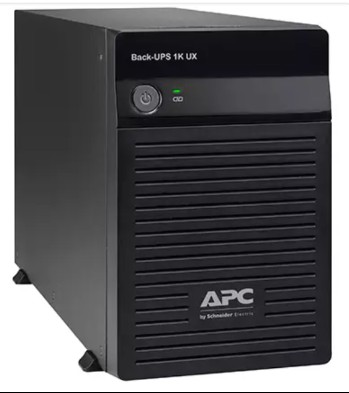
One of the most common questions Indian buyers ask before purchasing a UPS is simple: “How many minutes of backup will I actually get?” The answer is not printed on the box, because runtime depends on your load, the battery capacity and a few real-world losses that vary from one setup to another. The good news is that with one easy formula and a little understanding of your equipment, you can estimate UPS backup time fairly accurately. This guide walks you through the maths, the India-specific factors that affect it, and how to choose a UPS that delivers the runtime you need.

Why VA Rating Alone Doesn’t Tell You Runtime
A UPS labelled “1100VA” tells you the maximum load it can support, not how long it will run. Runtime is governed almost entirely by the battery capacity (measured in Amp-hours, Ah) and the actual load you connect. Two UPS units with the same VA rating can give very different backup times if their batteries differ in size. That is why the same model with a larger external battery pack can run for hours, while the standard internal battery may give only a few minutes.
The Basic Runtime Formula
Here is the formula most technicians use to estimate backup time:
Backup Time (hours) = (Battery Voltage × Battery Ah × Efficiency) ÷ Load in Watts
Let’s break down each part:
- Battery Voltage — the nominal voltage of the battery bank (e.g. 12V for a single battery, 24V for two in series).
- Battery Ah — the capacity of the battery, such as 7Ah, 9Ah or higher for external packs.
- Efficiency — UPS inverters lose some energy in conversion. Use 0.7 to 0.8 (70–80%) for a realistic estimate.
- Load in Watts — the total real power drawn by your connected devices. Note this is watts, not VA.
A Worked Example for an Indian Home Office
Suppose you have an APC UPS with a 12V, 7Ah battery and you connect a desktop PC plus monitor drawing about 120 watts in total.
(12 × 7 × 0.75) ÷ 120 = 63 ÷ 120 = 0.525 hours ≈ 31 minutes
Now reduce the load to just a Wi-Fi router and ONT drawing 20 watts:
(12 × 7 × 0.75) ÷ 20 = 63 ÷ 20 = 3.15 hours ≈ 189 minutes
This shows the single biggest lever for runtime: lower load = dramatically longer backup. The same battery that lasts half an hour with a PC can run a router for over three hours.
Converting VA to Watts (The Power Factor Trap)
Indian appliance specs often mix up VA and watts. To convert, multiply VA by the power factor:
| UPS VA Rating | Typical Power Factor | Approx. Real Watts |
|---|---|---|
| 600 VA | 0.6 | 360 W |
| 1000 VA | 0.6 | 600 W |
| 1100 VA | 0.6 | 660 W |
| 1500 VA | 0.6–0.9 | 900–1350 W |
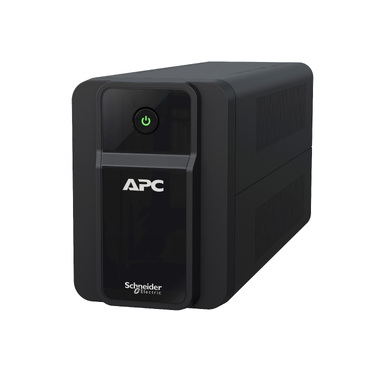
Most APC Back-UPS line-interactive models use a power factor around 0.6, while newer pure sine wave and online models offer higher factors closer to 0.9. Always size your load below the watt figure, not the VA figure.
India-Specific Factors That Reduce Runtime
The formula gives an ideal figure. In real Indian conditions, expect somewhat less because of:
- Heat — High ambient temperatures in summer reduce battery efficiency and shorten lifespan. A battery rated for 25°C performs worse at 40°C.
- Battery age — A 3-year-old battery may hold only 60–70% of its original capacity. Recalculate runtime as batteries age.
- Frequent outages — Repeated discharge–recharge cycles in areas with poor grid quality wear batteries faster.
- Surge and start-up loads — Devices like printers and laser equipment draw extra power when switching on, momentarily lowering runtime.
As a rule of thumb, take the calculated figure and reduce it by 15–25% for a conservative real-world estimate.
How to Get Longer Backup Time
If your calculated runtime is too short, you have three practical options:
- Reduce the load — Use LED monitors, plug only essential devices into the battery-backed sockets, and move printers to surge-only outlets.
- Choose a higher-capacity battery model — Some APC units support extended or external battery packs for multi-hour backup.
- Pick a UPS with a larger internal battery — Compare the Ah rating across models in the same VA class before buying.
For typical home and small-office needs, a unit like the APC Back-UPS 1100VA (BX1100C-IN) balances load capacity and runtime well. If you run sensitive equipment or need cleaner power with steadier runtime, the pure sine wave APC Back-UPS Pro 1000VA (BR1000G-IN) is a strong choice. Browse the full range of APC UPS systems to match capacity to your runtime goal.
Quick Reference: Estimated Runtime by Load
| Connected Load | Approx. Watts | Est. Runtime (12V/7Ah) |
|---|---|---|
| Wi-Fi router + modem | 15–25 W | 2.5–3.5 hours |
| Laptop + router | 50–70 W | 50–75 min |
| Desktop PC + monitor | 120–180 W | 20–35 min |
| CCTV NVR + 4 cameras | 40–60 W | 60–90 min |
Final Word
Estimating UPS backup time is not guesswork once you know the formula. Measure or estimate your real load in watts, plug in your battery’s voltage and Ah, apply a realistic efficiency factor, and trim the result for Indian heat and battery age. Do this before you buy, and you’ll never be caught off guard by a UPS that beeps and dies sooner than expected. When in doubt, size up slightly — a little extra runtime is always worth the peace of mind during a long Indian power cut.
Shop what this guide covers
- APC BX1100C-IN battery replacementThe correct RBC2 cartridge for the BX1100C-IN (1100VA).
- APC BR1000G-IN battery replacementThe correct RBC144 cartridge for the BR1000G-IN (1000VA).
- APC Back-UPS — for home & small officeLine-interactive UPS for desktops, Wi-Fi routers, CCTV and billing machines.
- All APC UPS systemsThe full genuine APC range, with GST invoice and pan-India delivery.
What size UPS do I need? »Find the battery for my UPS »Ask us on WhatsApp
Related guides
- Can You Upgrade to a Higher-Capacity APC RBC Battery? Compatibility & Runtime Guide (India 2026)
- First-Time UPS Buyer? A Complete Checklist Before You Purchase an APC Back-UPS in India (2026)
- Does Your APC Line-R Stabilizer Need Earthing? Installation & Safety Checklist Before You Buy (India 2026)
- APC Smart-UPS Online Running Costs in India: Double-Conversion Efficiency, ECO Mode & Electricity Bills Explained (2026)
- Ideal Load Percentage for Your APC Back-UPS: How Much Headroom Should You Buy in 2026? (India Guide)
All UPS & power-backup guides · APC battery replacement chart · APC UPS dealer in your city