
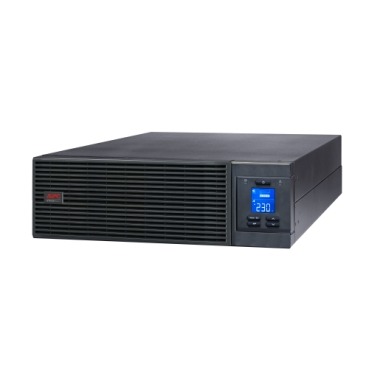
You’ve decided your server, NAS, EPBX or POS setup needs proper protection — but should you spend on a true double-conversion online UPS, or will a line-interactive Smart-UPS do the job? In India, where voltage sags, brownouts, frequency drift and dirty generator power are daily realities, this single decision affects both your budget and your uptime. This guide cuts through the marketing and helps you decide, using real APC models available in India and rupee-sensible logic.

What “online” actually means (and why it matters in India)
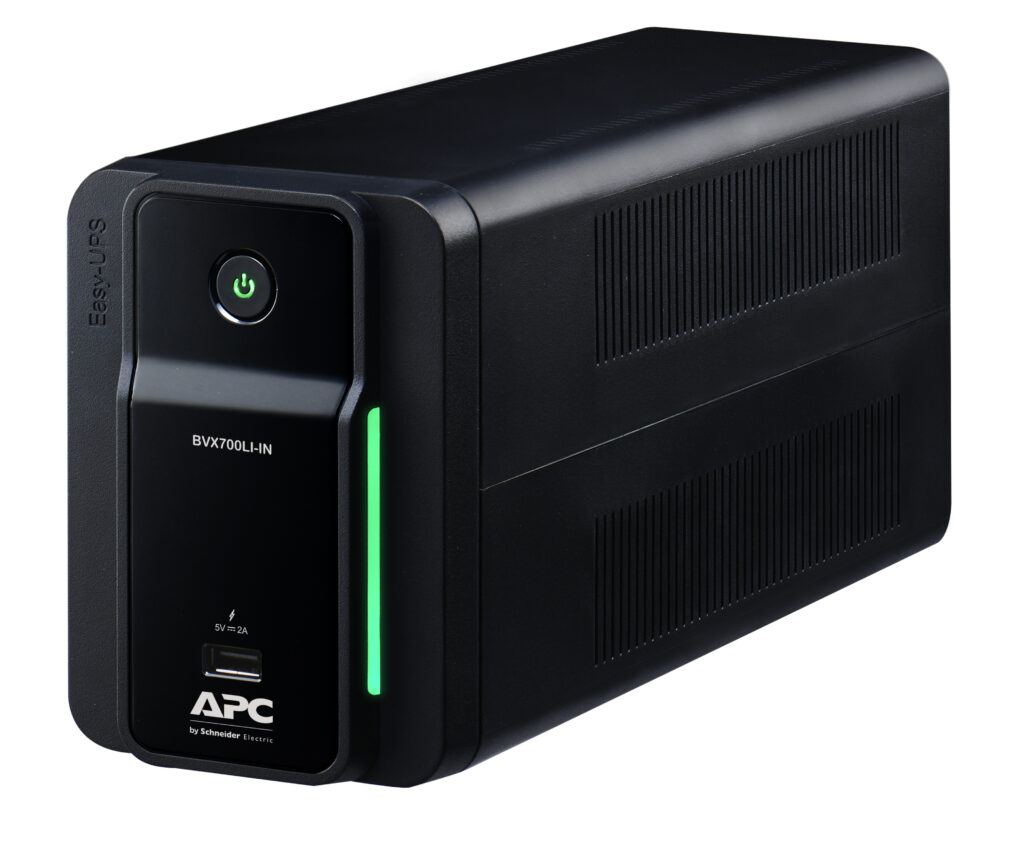
A line-interactive UPS (like the APC Smart-UPS SMT/SMV range) normally passes utility power straight through, correcting voltage with an autotransformer, and switches to battery only when the mains fails. There’s a small transfer time (2–6 ms) and the output frequency follows the incoming supply.
A true online (double-conversion) UPS — the APC Easy-UPS Online SRV/SRT and Smart-UPS SRT — continuously converts incoming AC to DC and back to a clean, regenerated AC sine wave. Your load always runs off the inverter. There is effectively zero transfer time, and the output voltage and frequency are perfectly regulated regardless of how ugly the input is.
In many Indian sites — unstable EB supply, frequent DG (diesel generator) switchover, wide 170V–270V swings — that continuous regeneration is exactly what sensitive equipment needs.
Line-interactive vs online: quick comparison
| Feature | Line-Interactive (Smart-UPS SMT/SMV) | Online Double-Conversion (Easy-UPS SRV / Smart-UPS SRT) |
|---|---|---|
| Transfer time | ~2–6 ms | Zero (no transfer) |
| Output waveform | Pure sine wave | Pure sine wave (regenerated) |
| Frequency regulation | Follows input | Tightly regulated (great for DG sites) |
| Handles wide voltage swings | Good | Excellent |
| Efficiency | Higher (~97–98%) | Slightly lower (~90–95%) |
| Typical use | Small servers, NAS, workstations, networking | Multi-server racks, EPBX, medical, industrial, DG-fed loads |
| Relative cost | Lower | Higher |
When line-interactive is enough
You don’t always need online. A quality line-interactive Smart-UPS with pure sine-wave output is perfectly adequate when:
- You run a single server, a NAS, or a few network devices that tolerate a few milliseconds of transfer time (almost all modern SMPS-based gear does).
- Your mains voltage is reasonably stable and you’re not routinely running on a generator.
- Budget matters and the load is not mission-critical to the second.
- You want higher running efficiency and lower heat in the rack.
Browse the APC line-interactive UPS range if this matches your setup.
When you should insist on a true online UPS
Choose double-conversion when downtime or data corruption is genuinely expensive:
- Multiple servers / a full rack where a millisecond glitch across boards can cause resets or RAID issues.
- Frequent DG switchover — generators produce frequency wander and voltage spikes that online UPS completely isolates the load from.
- Sensitive or regulated equipment — medical, lab, telecom EPBX, industrial PLC/SCADA, precision instrumentation.
- Very poor grid quality with constant deep sags, surges, and noise.
- Zero-tolerance uptime SLAs where even a controlled restart is unacceptable.
For these, look at the APC online UPS (Easy-UPS SRV / Smart-UPS SRT) range, available in India from 1kVA up to 10kVA and beyond.
Sizing: don’t just match the label wattage
Getting the VA/W right is as important as choosing topology. A few India-specific rules:
- Add up real load in watts, not nameplate. A 1U server rarely draws its full PSU rating — measure or use ~50–70% of PSU rating.
- Keep the UPS at 60–80% of capacity so you have headroom for future growth and better battery life. Never buy exactly at 100%.
- Match power factor. Modern APC online units are often unity (or near-unity) PF, so kVA ≈ kW — simpler sizing than older 0.8 PF models.
- Decide runtime up front. Online UPS runtime is set by external battery packs; if you need 30+ minutes for a large rack, plan (and budget) for extra battery packs and floor space.
- Plan safe shutdown. Use APC PowerChute software over the network card so servers gracefully shut down before batteries drain.
A worked example: a rack with two servers (~350W each), a switch (~60W) and a firewall (~40W) totals ~800W. At 70% loading you’d want roughly a 1.5–2 kVA unity-PF online UPS, then add battery packs to hit your target runtime.
Total cost of ownership, the honest version
Online UPS costs more upfront and runs a couple of percent less efficiently, which shows up on your electricity bill over years. Weigh that against the cost of a single unplanned outage: corrupted databases, re-syncing RAID arrays, lost transactions, or a service SLA breach. For most genuine “critical” loads, one avoided incident pays for the topology difference. Also budget for eventual battery replacement — keep genuine APC RBC replacement batteries in your maintenance plan so runtime stays reliable.
FAQ
Is a Smart-UPS an online UPS?
Most Smart-UPS models (SMT/SMV series) are line-interactive with pure sine-wave output. Only the Smart-UPS SRT (and the Easy-UPS SRV) are true double-conversion online units. Check the model prefix before you buy.
Will a line-interactive UPS damage my server with its transfer time?
No. Modern server power supplies easily ride through a 2–6 ms transfer with pure sine-wave output. Transfer time only becomes a concern for the most sensitive or intolerant equipment, or where you have very frequent grid disturbances.
Do I need an online UPS if I run on a diesel generator?
Usually yes. Generators produce frequency and voltage instability during load changes and switchover. A double-conversion online UPS fully decouples your load from those variations, delivering clean, stable power regardless of DG behaviour.
How much runtime can I get from an online UPS?
As much as you’re willing to add in external battery packs. Base units give a few minutes at full load; adding APC battery packs can extend this to 30 minutes, an hour, or more — the trade-off is cost and physical space in the rack.
The bottom line
If you’re protecting a single server or NAS on a fairly stable supply, a pure sine-wave line-interactive Smart-UPS is cost-effective and reliable. If you run a multi-server rack, depend on generators, or can’t afford even a controlled restart, invest in a true online double-conversion UPS. Size at 60–80% loading, plan your battery runtime, and set up PowerChute for safe shutdown — that combination keeps Indian businesses running through the worst our grid can throw at them.
Shop what this guide covers
- Which APC UPS for Servers & Server Racks?Load table, VA sizing and the genuine APC units we stock for it.
- Genuine APC RBC replacement batteriesFactory-sealed APC Replacement Battery Cartridges with full manufacturer warranty.
- APC Back-UPS — for home & small officeLine-interactive UPS for desktops, Wi-Fi routers, CCTV and billing machines.
- APC Smart-UPS & online UPSDouble-conversion, pure sine-wave power for servers, racks and critical loads.
What size UPS do I need? »Find the battery for my UPS »Ask us on WhatsApp
Related guides
- APC Smart-UPS Online Running Costs in India: Double-Conversion Efficiency, ECO Mode & Electricity Bills Explained (2026)
- How Long Will Your APC Smart-UPS Online Really Last? Runtime vs Load Guide for Indian Server Rooms (2026)
- APC Smart-UPS SRT vs SMT vs SMC: Which One Is Actually Online? (India Buying Guide 2026)
- Hardwired or Plug-In? APC Smart-UPS Input/Output Connections Explained Before You Buy (India 2026)
- Do You Need an Isolation Transformer with Your APC Online UPS? (India Buying Guide 2026)
All UPS & power-backup guides · APC battery replacement chart · APC UPS dealer in your city